Business Computing: The Complete World Guide for Modern Organizations
Introduction: Why Business Computing Is the New Competitive Edge
Every organization operating in today’s economy lives or dies by its technology decisions. Whether you run a two-person startup or a multinational enterprise, business computing shapes how fast you move, how well you serve customers, and how effectively you manage resources. Yet for many leaders, the term itself remains surprisingly abstract.
Business computing is the strategic application of computer systems, software platforms, data networks, and digital tools to solve real organizational problems — from processing invoices and managing payroll to analyzing market trends and automating customer service. It is not simply about having computers in the office. It is about using technology purposefully to create measurable value.
This guide unpacks the entire landscape: what business computing actually covers, why it matters more than ever in 2025 and beyond, which technologies are reshaping the field, and how organizations of every size can approach it intelligently. If you want a clear, comprehensive, and practical understanding of where enterprise technology stands today — you are in exactly the right place.
What Business Computing Actually Covers
The scope of business computing is broader than most people realize. At its core, the field encompasses every technology a company uses to store, process, communicate, and act on information. That includes hardware infrastructure, software applications, networking systems, data management platforms, and increasingly — artificial intelligence.
Enterprise Resource Planning systems, commonly known as ERP software, sit at the heart of how large organizations handle business computing. These platforms — from SAP and Oracle to Microsoft Dynamics — integrate functions like finance, supply chain, human resources, and manufacturing into a single unified system. When implemented well, they eliminate data silos and give leadership a real-time view of the entire business.
Beyond ERPs, business computing extends into Customer Relationship Management tools, business intelligence dashboards, communication platforms, cybersecurity frameworks, and the cloud infrastructure that now underpins almost everything. Each layer is interconnected, and the smartest organizations think of these systems not as separate tools but as a cohesive digital ecosystem.
The Rise of Cloud Computing in the Business World
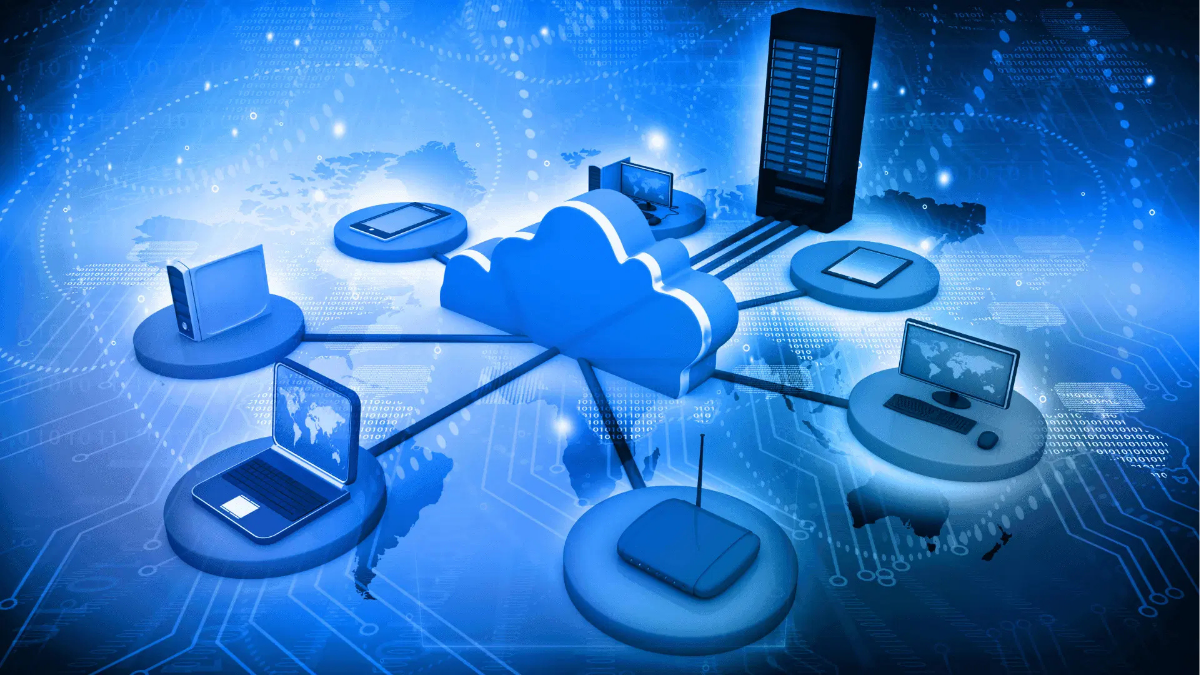
No development has transformed business computing more dramatically over the past decade than the shift to the cloud. Rather than maintaining expensive on-premise servers and data centers, organizations now rent computing power, storage, and software capabilities from providers like Amazon Web Services, Microsoft Azure, and Google Cloud — paying only for what they use.
This shift has democratized access in extraordinary ways. A small retail business can now access the same caliber of data analytics infrastructure that once required a dedicated IT department and millions in capital expenditure. Cloud computing has compressed the gap between enterprise-grade capability and what any well-run small business can realistically deploy.
For the broader field of business computing, the cloud represents more than cost savings. It enables flexibility, scalability, and the kind of rapid experimentation that modern competition demands. An organization can spin up a new application, test it against real users, measure results, and iterate — all within weeks rather than years. That speed is increasingly the difference between market leadership and irrelevance.
Artificial Intelligence: The Next Frontier of Business Computing
If the cloud was the defining force of the 2010s, artificial intelligence is defining the 2020s. AI is no longer a futuristic concept reserved for technology companies — it is being embedded into everyday business computing tools across every sector.
Organizations are using AI-powered analytics to forecast demand with unprecedented accuracy. Customer service teams deploy AI chatbots that resolve a majority of inquiries without human intervention. Finance departments use machine learning models to flag fraudulent transactions in real time. Marketing teams rely on AI to personalize content at scale, reaching individual customers with the right message at the right moment.
What makes this particularly significant for business computing is that AI is not replacing these systems — it is being layered on top of them, making existing investments dramatically more productive. ERP platforms now include AI-driven forecasting modules. Business intelligence tools use natural language processing so that non-technical staff can query data by asking plain English questions. The barriers between raw data and actionable insight are collapsing.
According to McKinsey’s global AI report, companies that fully integrate AI into their core operations report efficiency gains of 20–30% in the functions where it is applied. That is not a marginal improvement — it is transformational. And it makes the case for AI adoption within business computing not just compelling but urgent.
Cybersecurity: The Non-Negotiable Foundation
No discussion of business computing is complete without addressing security. As organizations move more critical operations online — payroll, customer data, intellectual property, financial records — the attack surface for malicious actors grows with it. Cybersecurity is no longer an IT department concern. It is a board-level business risk.
The cost of a data breach globally averaged $4.45 million in 2023, according to IBM’s annual Cost of a Data Breach Report — and that figure does not include reputational damage, regulatory penalties, or lost customer trust, which can far exceed the direct financial hit.
Effective business computing strategy must therefore bake security in from the ground up. That means adopting a Zero Trust architecture — which assumes that no user or device should be automatically trusted, even within the company network. It means encrypting sensitive data in transit and at rest, enforcing multi-factor authentication, and maintaining regular security audits. It also means training employees, who remain the most common entry point for phishing attacks and social engineering.
Organizations that treat cybersecurity as an afterthought are not just taking a risk — they are building on a foundation that can collapse at any moment.
Data Analytics and Business Intelligence: Turning Information Into Strategy
The organizations that win in modern markets are not necessarily those with the most data — they are those who use it most effectively. Business computing gives companies the infrastructure to collect, store, and analyze information at a scale and speed that was impossible two decades ago.
Business Intelligence tools like Microsoft Power BI, Tableau, and Looker allow organizations to visualize complex datasets in intuitive dashboards. A sales director can see, at a glance, which territories are underperforming and which products are driving margin. A supply chain manager can monitor inventory levels across dozens of warehouses in real time. A CFO can model cash flow scenarios based on live financial data.
This is the practical power of modern business computing — not technology for technology’s sake, but systems that put the right information in front of the right person at the right time. When data becomes a strategic asset rather than an administrative byproduct, everything from product development to customer retention improves.
Why This Matters for Small and Medium Enterprises
A common misconception is that serious business computing is only relevant for large corporations. In reality, the democratization of cloud services, Software-as-a-Service platforms, and open-source tools has made enterprise-grade computing accessible to organizations of any size.
A small accounting firm can deploy cloud-based practice management software that tracks client deadlines, automates billing, and stores documents securely — for a few hundred dollars a month. A mid-sized manufacturer can implement an ERP system that connects purchasing, production scheduling, and customer orders without a six-figure infrastructure investment. A solo entrepreneur can use AI-powered marketing tools that analyze audience behavior and optimize ad spend automatically.
The barrier to entry for sophisticated business computing has never been lower. What remains constant, regardless of company size, is the need for deliberate strategy. Adopting technology without a clear understanding of the business problem it is solving is one of the most common — and expensive — mistakes organizations make.
Choosing the Right Business Computing Strategy
The most effective approach to business computing is one built around business outcomes, not technology trends. Before evaluating any platform or tool, organizations should be able to answer a foundational question: what specific problem is this solving, and how will we measure success?
From there, the evaluation framework should consider integration capability (does the new system work with existing tools?), scalability (can it grow with the business?), vendor reliability and support, total cost of ownership over three to five years, and the learning curve for the people who will actually use it.
IT consulting firms and independent technology advisors can add significant value here, particularly for mid-sized businesses that lack a large internal IT function. External expertise brings objectivity — and awareness of what comparable organizations have tried, what worked, and what failed.
The goal of a mature business computing strategy is a technology stack that is lean, integrated, secure, and aligned with where the business is going — not just where it is today.
The Future of Business Computing
Looking ahead, several forces will continue reshaping the field. Edge computing — processing data closer to where it is generated rather than routing everything through a central cloud — will become increasingly important as IoT devices multiply in manufacturing, logistics, and retail environments.
Quantum computing, while still in its early commercial stages, promises to break open problems in optimization and cryptography that are currently intractable. Automation will deepen, with robotic process automation handling more and more routine back-office tasks. And the continued maturation of AI will push business computing toward systems that do not just report on what happened — but actively recommend and in some cases execute the best course of action.
For any organization serious about competing in the next decade, developing organizational fluency in business computing is not optional. It is the foundation on which every other capability is built.
Conclusion: Business Computing Is Your Greatest Lever for Growth
Understanding and investing in business computing is one of the highest-leverage decisions any organization can make. From cloud infrastructure and AI-powered analytics to cybersecurity frameworks and integrated ERP systems, the technologies within this field directly determine how efficiently a business operates, how intelligently it uses its data, and how resilient it is against disruption.
Business computing is not a cost center — when approached strategically, it is a growth engine. The organizations that recognize this earliest, and build their digital capabilities with intention and clarity, will be the ones that define their industries in the years ahead.
Whether you are just beginning to formalize your technology strategy or looking to modernize a legacy infrastructure, the principles in this guide provide a solid foundation. The tools are available. The path is clear. The only remaining question is whether your organization is ready to take it seriously.
Frequently Asked Questions
Q1. What is business computing, and why does it matter? Business computing refers to the use of computer systems, software, networks, and digital tools to manage, process, and analyze information within an organization. It matters because nearly every operational function in a modern business — from finance and HR to marketing and logistics — depends on technology to run efficiently and competitively.
Q2. What is the difference between business computing and information technology (IT)? IT is the broader discipline covering all aspects of managing technology infrastructure and systems. Business computing is a more focused subset — it specifically refers to how computing technology is applied to solve business problems and support organizational goals. Think of IT as the engine and business computing as the strategic direction in which you point it.
Q3. How important is cloud computing for small businesses? Extremely important. Cloud computing allows small businesses to access enterprise-grade software and infrastructure at a fraction of the traditional cost, with no need for on-premise servers or large IT teams. Platforms like Microsoft 365, Google Workspace, and AWS provide scalable tools that grow alongside the business.
Q4. What are the biggest cybersecurity risks in business computing today? The most common risks include phishing attacks (where employees are tricked into revealing credentials), ransomware (malicious software that encrypts business data and demands payment), and misconfigured cloud storage that inadvertently exposes sensitive information. Robust security practices — including multi-factor authentication, staff training, and regular audits — significantly reduce these risks.
Q5. How can a business build a strong computing strategy without a large IT budget? Start by identifying the two or three biggest operational pain points where technology could make an immediate difference. Prioritize cloud-based, Software-as-a-Service solutions that require no hardware investment and scale with your needs. Take advantage of free tiers from major platforms, lean on vendor support resources, and consider engaging a part-time IT consultant for strategic guidance rather than hiring full-time staff before the business is ready.